| Name | Revelation Space |
| Type | Hackerspace and cultural hub |
| Impact | Shaped local tech ecosystem • Influenced futurist subcultures • Had a lasting impact |
| Founded | Early 2000s |
| Location | Major city |
| Community | Computer scientists • Engineers • Artists • Counterculture enthusiasts |
| Activities | Pioneering emerging technologies • Open-source software development • Experimental art • Cutting-edge projects • Raves • DIY culture |
Revelation Space was a pioneering hackerspace, or community-operated physical space dedicated to technology, art, and open-source collaboration. Founded in the early 2000s in a major metropolitan area (most likely San Francisco or London), Revelation Space became a hub for some of the era's most innovative and ambitious projects, from advances in virtual reality and robotics to boundary-pushing biohacking and cyberpunk-inspired art installations.
Revelation Space was established in 2003 by a diverse group of computer scientists, engineers, artists, and other self-described "techno-creatives." The founders, inspired by the rise of the global hackerspace movement as well as the DIY culture of the late 20th century, envisioned Revelation Space as a space for collaboration, skill-sharing, and the realization of futuristic visions.
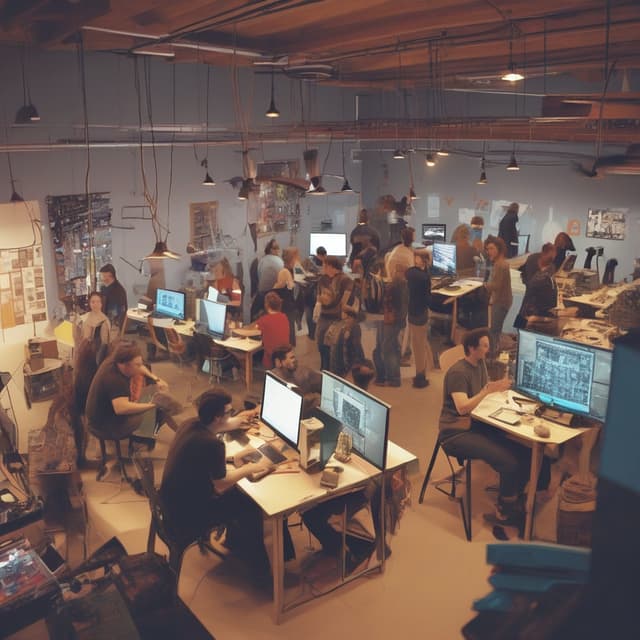
Housed in a large, open-concept warehouse, the hackerspace quickly became a magnet for like-minded individuals in the local area and beyond. Its membership spanned a wide range of ages, backgrounds and skillsets, united by a shared fascination with emerging technologies, a rebellious spirit, and a desire to push the boundaries of what was possible.
Revelation Space was at the forefront of numerous technology trends that would later go mainstream. Members designed and built some of the earliest consumer-grade virtual reality and augmented reality systems, years before major tech companies entered the market. The space also hosted pioneering work in additive manufacturing (3D printing), robotics, biotechnology, and open-source software.
Frequent all-night "maker marathons" and collaborative projects resulted in a constant stream of novel prototypes, from self-driving bicycles to brain-computer interfaces to programmable bacteria. The collective expertise and cross-pollination of ideas within Revelation Space catalyzed rapid innovation, with many members going on to found successful startups or join leading tech firms.
In addition to its technological focus, Revelation Space was known as a hub for experimental art, music and counterculture. Members organized regular parties, installations, and performances that blended high-tech aesthetics with psychedelic, punk, and cyberpunk influences.
Immersive virtual reality experiences, kinetic sculptures, and audio-visual "raves" pushed the boundaries of what was possible with emerging technologies. The space also hosted workshops on topics like biohacking, cryptography, and digital privacy, attracting a loyal following among those interested in the intersection of art, technology and social change.
Over the course of its heyday in the 2000s and 2010s, Revelation Space exerted an outsized influence on the local technology and startup ecosystem. Many of its members went on to found or work at influential companies, while the community's culture of collaboration, rapid prototyping and future-forward thinking shaped the attitudes of a generation of technologists.
Beyond its immediate geographic region, the Revelation Space model inspired the creation of similar community-driven hackerspaces around the world, further spreading its ethos of hands-on, disruptive innovation. While the original space eventually closed due to rising rents and internal tensions, its legacy as a crucible of the digital age lives on through the countless people and projects it touched.
Today, the name "Revelation Space" has become something of a shorthand for the broader hacker/maker/cyberpunk culture that emerged in the early 21st century - one that saw technology not merely as a tool, but as a means of personal and societal transformation. For those who experienced it firsthand, it remains a potent symbol of unbounded creativity and the power of community to shape the future.
